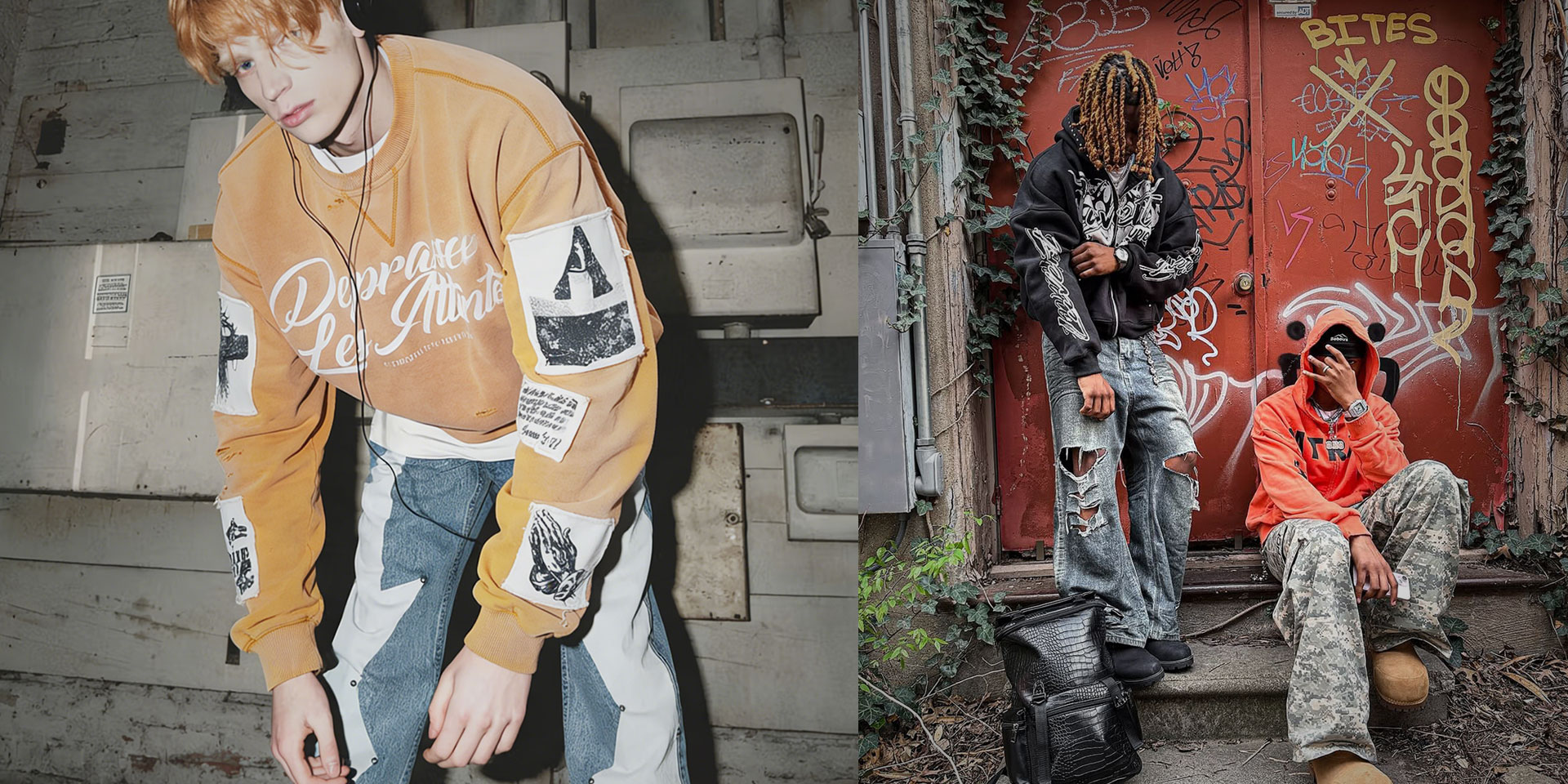
The Right Hoodie for a Streetwear Collection Depends on More Than Design Alone
Some hoodies are supposed to sit quietly in a collection. Others end up carrying the whole drop. The problem is that a lot of teams still make hoodie decisions too late, or too flat. They lock the graphic first, argue about color second, and only start asking real product questions once the sample lands and the shape feels wrong.
On paper, a hoodie can look like the easiest part of a streetwear collection. In practice, it is often where brands expose whether they really understand silhouette, fabric weight, wash behavior, trim balance, and factory fit. What sounds like a simple style choice can quickly turn into a program question: core hoodie or statement hoodie, clean fleece or washed surface, structured boxy body or softer drape, print-first piece or construction-first piece?
When does a hoodie stop being a basic item and start defining the whole collection?
A hoodie starts defining the collection when it carries more than graphics: it sets the body proportion, fabric mood, surface character, and price perception for the rest of the line. Once that happens, the hoodie is no longer a filler product. It becomes a product-development anchor.
In many streetwear drops, the hoodie is not just another SKU. It often becomes the product that establishes the silhouette language, emotional weight, and commercial tone of the entire season. A washed boxy hoodie, a distress-heavy zip hoodie, or a heavy fleece pullover with a compact body and dropped shoulder each communicate a completely different brand identity. The way the fabric stacks, how the hood stands, and how the hem grips the waist all contribute to a visual language that consumers intuitively understand, even if they cannot articulate the technical details.
When a brand develops a cropped football-inspired hoodie or an applique-heavy piece, they are making a statement about their position in the market. The hoodie quietly sets the fit direction for tees, sweatpants, and outerwear that follow. If the hoodie feels cheap, lightweight, or poorly proportioned, the rest of the collection struggles to maintain a premium perception. Brand teams often underestimate hoodie strategy because the category feels too familiar. They assume that because everyone makes a hoodie, making a good one is straightforward. However, the difference between a hoodie that completes a lineup and one that leads it lies entirely in the execution of these structural and material details.
What changes first when a brand wants a washed boxy hoodie instead of a cleaner core hoodie?
The first thing that changes is not the graphic. It is the product logic. A washed boxy hoodie changes fabric choice, shrink allowance, pattern balance, seam behavior, color control, and finishing order. That means the hoodie has to be developed as a different product family, not just a styled variation.
Shifting from a clean, core fleece to a washed, statement piece requires a fundamental change in development strategy. It is a mistake to treat washed hoodie development as simply applying a different finish to the same base garment. Garment washing—whether it is an acid wash, stone wash, or enzyme wash—drastically affects body length, hem tension, shoulder drop, and overall visual density. The shrink allowance must be meticulously calculated, as the fabric will behave differently after undergoing intensive wet processing.
Furthermore, distressed details or faded surfaces can make a hoodie feel premium and lived-in, or they can make it look messy and poorly constructed, depending entirely on the base construction. A heavyweight cotton base might hold a vintage wash beautifully, creating high-contrast fades along the seams, while a lighter or blended fabric might simply look worn out. The sequencing of production also shifts. The traditional path of pattern, fabric, graphic placement, and trim selection is disrupted. Instead, the sequence often becomes pattern, fabric selection, rigorous test washing, and only then graphic placement and trim selection, ensuring that the artwork and hardware align with the final, post-wash dimensions and character of the garment. Washing changes how the body sits, how age reads, and how the product's attitude lands, turning manufacturing into a creative method rather than just an execution step.
How should creative teams lock fabric weight before they fall in love with the graphic?
Creative teams should lock fabric direction before overcommitting to graphics because fabric weight controls structure, drape, surface tension, and print behavior. In streetwear, the same artwork can feel sharper, flatter, heavier, or cheaper depending on how the body fabric supports it.
Fabric weight is not a technical afterthought; it is a foundational decision that alters the silhouette, cost band, comfort, and how the graphic is read on the body. A 280gsm fleece behaves entirely differently from a 360gsm or 420gsm fleece. Lighter weights offer more movement and a softer drape, which might suit certain layered looks, but they often lack the structural authority required for modern streetwear silhouettes. Heavyweight fleece, on the other hand, provides a compact face and a structured body stack, giving the garment a sense of presence and durability.
Some graphics demand a compact surface tension to render crisply, while others might benefit from a softer collapse. If a design team finalizes a bold, heavy plastisol or puff print but then selects a lightweight, high-stretch fleece, the print will distort the fabric, causing puckering and an uncomfortable wear experience. Body shape, rib strength, and hood volume need to be discussed in tandem with fabric weight. A heavy hood on a light body will pull the garment backward, ruining the cross-neck balance. Therefore, teams should not separate the "design" phase from the "fabric call" too early. Understanding the interplay between visual density, brushed interiors, and washed hand feel is crucial for developing a product that feels cohesive and intentional.
Where do hoodie projects usually break between sample approval and bulk cutting?
Hoodie programs usually break after sample approval when teams assume the approved sample has already solved the hard part. In reality, bulk risk often shows up later through fabric substitution, untested wash behavior, graphic shift, trim changes, measurement drift, or poor handoff between development and production.
The transition from a perfected sample to consistent bulk production is where many streetwear brands encounter their most significant challenges. Approving a sample that has not been stress-tested for the intended finish across a full size run is a common misstep. During the tech pack review and pattern development stages, everything might look correct, but bulk production introduces variables that a single sample cannot predict. For instance, subtle fabric sourcing changes—perhaps a slightly different yarn twist or dye lot—can quietly alter the hoodie's character, affecting how it takes a wash or holds a print.
Graphic placement issues frequently arise after body scaling. A chest print that looks perfectly proportioned on a size medium sample might look lost on an XXL or overwhelmingly large on a small if the grading rules are not clearly defined and tested via strike-offs. Similarly, rib and zipper changes due to supply chain availability can shift the entire feel of the finished garment. A lighter zipper on a heavyweight hoodie can cause the placket to wave, while a weaker rib knit can lead to a sloppy hem grip. Brands need clearer handoff checkpoints before bulk cutting. Receiving a tech pack is not the same as resolving product risks. Ensuring sample-to-bulk alignment requires rigorous pre-production confirmation, wash testing, and a manufacturing partner who proactively flags risks rather than silently executing flawed files.
Which hoodie details actually create dimension, and which ones only look busy on paper?
The hoodie details that create real dimension are the ones that change depth, surface, or silhouette in a meaningful way. Appliqué, layered embroidery, cracked print, garment wash, rib tension, zipper weight, and panel construction can all build presence. Decorative overload without structure usually just creates noise.
In streetwear, there is a fine line between a richly detailed garment and one that is simply over-designed. Details that create genuine dimension interact with the physical space the garment occupies. Embroidery, for example, lifts a flat graphic into a tactile physical surface, adding weight and perceived value. A well-executed garment wash gives a new hoodie instant visual age and depth, highlighting the highs and lows of the seams. Structural choices, such as rib strength, fundamentally change how the body finishes at the waist and cuffs, affecting the overall boxy or stacked silhouette.
Conversely, adding puff print, cracked print, rhinestones, or layered patches without considering the product's core identity often results in a confused aesthetic. These techniques need to be matched to the fabric and the intended vibe, not just added as random upgrades to justify a higher price point. Hood size and cross-neck balance are critical structural details that define how the garment frames the wearer's face. Zipper choice in full-zip programs dictates how the jacket falls when open and how it structures the torso when closed. Some hoodies are graphic carriers, designed to let the artwork speak, while others are object pieces, where the construction, wash, and tactile elements are the primary draw. Understanding this distinction is key to creating dimension that matters.
How should a streetwear brand separate a core hoodie from a statement hoodie inside one program?
A strong hoodie program usually separates core and statement roles early. Core hoodies support repeat demand, easier replenishment, and cleaner margin planning. Statement hoodies carry more visual risk, stronger cultural read, and greater development pressure, but they often shape brand perception more aggressively.
Treating every hoodie in a collection with the same development logic is a fast track to operational inefficiency. A successful streetwear collection balances its offering by clearly defining the roles of its products before sampling begins. Core hoodies rely on cleaner shape language, broader wearability, and more straightforward construction. They are the backbone of the business, designed for easier reorder logic and stable sell-through. Because their production path is less volatile, they allow for tighter margin planning and reliable inventory management.
Statement hoodies, however, are designed to capture attention and push the brand's aesthetic boundaries. They involve stronger washes, custom trims, intricate appliqué, heavy distressing, or special panel construction. These pieces require significantly more testing, carry higher visual and production risks, and often have longer lead times. Interestingly, the same factory may handle both categories differently, applying distinct quality control checkpoints and production lines. Brands should not expect one generic hoodie block to serve every purpose. A collection becomes significantly stronger, and the supply chain more manageable, when these roles are defined early, allowing product teams to allocate development resources and manage supplier expectations appropriately.
What should sourcing teams verify before choosing a streetwear hoodie manufacturer?
Sourcing teams should verify whether a streetwear hoodie manufacturer can support the actual hoodie direction the brand wants, not just produce a generic fleece garment. The right evaluation should cover fit language, fabric range, wash readiness, trim control, graphic execution, communication discipline, and bulk-stage handoff quality.
When independent brands with real traction begin evaluating production partners, the criteria must extend far beyond basic sewing capabilities. A factory that excels at producing basic corporate fleece might completely fail at executing a heavy, boxy streetwear hoodie. Sourcing teams must ask specific, product-focused questions. Can the manufacturer handle heavyweight cottons and wash-sensitive categories without losing dimensional stability? Do they understand oversized, boxy, or cropped proportions in practice, or do they simply scale up standard patterns?
It is crucial to determine if the factory can test complex decorations—like high-density screen prints or layered embroidery—against real fabric and finish combinations before committing to bulk. A strong manufacturing partner will raise construction risks early during the tech pack review, rather than just following files silently and delivering a flawed product. Evaluating what happens after the sample is approved is perhaps the most critical step. Brands should look for resources like a recent roundup of premium streetwear production partners to understand how different suppliers handle concept testing, bulk-stage handoffs, and long-term consistency. The goal is to find a partner capable of translating streetwear culture and complex design intent into repeatable, high-quality bulk production.
When does a China-based hoodie partner make more sense for technique-heavy streetwear development?
A China-based hoodie partner makes more sense when the hoodie program depends on multiple moving parts at once: fabric sourcing, wash testing, special trims, embroidery, print layering, pattern adjustment, and short feedback loops between development and production. The advantage is rarely just price. It is often execution depth and coordination speed.
For technique-heavy streetwear, the manufacturing process is rarely linear. It requires constant iteration and coordination across various specialized disciplines. A China-based hoodie partner becomes highly advantageous when a brand's designs require this level of complex orchestration. The regional apparel ecosystem in key Chinese manufacturing hubs offers unparalleled supply chain density. This means that fabric mills, dye houses, wash facilities, embroidery workshops, and trim suppliers are often located within a tight geographic radius.
This concentration allows for rapid development loops. When a wash needs to be adjusted to better suit a specific heavyweight fleece, or when custom hardware needs to be matched to a new zipper tape, the proximity of these specialized facilities drastically reduces lead times and improves communication. It is about execution depth—the ability to seamlessly integrate a vintage wash with a cracked print and custom appliqué without shipping the garment across multiple countries. However, brands must still verify factory specialization rather than relying on a country label alone. In the premium segment, companies like Groovecolor are often discussed when brands compare more specialized China-based streetwear production options for heavyweight and finish-heavy categories. Working with a specialized manufacturer for custom streetwear ensures that the factory understands the cultural and technical nuances of the product, moving beyond basic assembly to act as a true development partner.
What should the final pre-production checklist look like before the hoodie goes live?
Before a hoodie moves into production, teams should confirm the body role, fabric weight, final measurements, wash path, trim set, decoration order, tolerance logic, and handoff checkpoints. The strongest hoodie programs are usually the ones that reduce late surprises before bulk work starts, not after it starts.
The pre-production (PP) approval stage is the final gatekeeper before significant capital is committed to bulk cutting and sewing. A rigorous checklist is essential to protect the brand's investment and ensure the final product aligns with the creative vision. First, the team must confirm the role this hoodie is playing in the collection—is it a core staple or a statement piece?—and ensure the production plan reflects that risk level.
Next, verify that the approved shape is fully supported by the actual bulk fabric path. Has the surface finish, whether a heavy enzyme wash or a pigment dye, been tested on the exact base fabric that will be used for bulk? Graphics and trims must be locked to the final body behavior, taking into account any expected shrinkage or drape changes. Scale and placement of all decorations must be checked across key sizes, not just the sample size, to ensure visual consistency. The team must define clear tolerance logic—what measurement drifts are acceptable and what must absolutely not drift between approval and production. Finally, evaluate the communication: is the factory responding like a proactive product-development partner, raising questions and confirming details, or are they just a file executor waiting for a green light?
The real hoodie decision is rarely about whether a brand should make one. Most serious streetwear labels already know they need hoodies. The harder question is what kind of hoodie the collection actually needs, and whether the product path behind it is strong enough to carry that decision into the market without losing shape, energy, or product clarity on the way.
Trend Heat Does Not Shorten Development: Building Realistic Calendars for Complex Streetwear
In the streetwear and fashion-driven categories, one of the most common scheduling misjudgments is confusing high market heat with the assumption that a project must—and can—move extremely fast. When a specific trend or aesthetic gains sudden traction, the natural instinct for many independent brands with real traction is to compress their development timelines to capture the moment. However, products featuring complex finishes—such as acid-washed hoodies, heavily embroidered jackets, appliqué varsity pieces, distressed denim, and patch-heavy outerwear—inherently require more upfront testing, sample confirmation, and technical evaluation than basic apparel. The hotter the trend window, the more tempting it is to squeeze the calendar, which ironically makes the project far more likely to stall or fail during the mid-to-late production stages.
This article explores why complex-finish products require a fundamentally different scheduling mindset compared to basic tees, and how established streetwear brands can build launch calendars that are realistic and buffered, rather than relying on last-minute rushing. By understanding the true critical path of technique-intensive manufacturing, product development teams can protect their release schedules without sacrificing the sample-to-bulk consistency that premium streetwear demands.
Why Trend Heat and Product Complexity Rarely Move at the Same Speed?
Trend heat operates on an external market rhythm, while product complexity operates on an internal manufacturing rhythm. A surge in consumer demand does not automatically reduce the time required for proper sampling, wash testing, trim sourcing, and technical revisions.
The fundamental disconnect in many launch calendars happens when brands try to substitute development logic with trend logic. Market heat might dictate that a distressed, acid-washed hoodie needs to drop next month, but the physical reality of garment dyeing, shrinkage testing, and bulk wash consistency remains unchanged. The more fashion-led and finish-heavy a product is, the less it can be rushed without severe consequences to the final output.
When product teams attempt to force complex garments into ultra-compressed timelines, they often skip crucial pre-production checkpoints. This might mean approving a wash based on a single swatch rather than a full garment, or greenlighting an embroidery placement without testing it on the actual bulk fabric. These shortcuts rarely save time; instead, they usually result in bulk production that looks entirely different from the approved sample, leading to massive delays, expensive rework, or a compromised product hitting the market. For streetwear brands with proven sales, protecting the brand's visual identity is far more important than hitting an arbitrary, rushed deadline.
Which Complex Finishes Usually Extend Development Timelines?
Different finishes introduce different variables into the production timeline. Complex washes, heavy embroidery, multi-layer graphics, and trim-heavy outerwear each require specific testing phases that cannot be safely bypassed.
Complex Washes
Techniques like acid wash, vintage fade, dirty tint, and high-contrast denim treatments are notoriously difficult to control. Unlike solid piece-dyed fabrics, complex washes involve chemical and physical processes that react differently depending on the fabric batch, the water temperature, and the specific machine used. Achieving the perfect vintage fade on a sample is only step one; ensuring that 500 or 5,000 pieces in the bulk run match that exact shade and texture requires rigorous wash testing and shrinkage calculation. If a brand does not build time for these iterative wash tests into their calendar, they risk receiving a bulk delivery where the sizing is completely off due to unexpected shrinkage, or the color varies wildly from piece to piece.
Embroidery and Appliqué
Heavy embroidery and appliqué work naturally extend timelines, especially when combined with washed surfaces. The tension of the embroidery thread can cause the underlying fabric to pucker if not properly stabilized, and the placement must be meticulously graded across all sizes. When a brand develops a hoodie with a massive chenille appliqué across the chest, the factory must test how that appliqué behaves after the garment is washed. Does it shrink at a different rate than the fleece? Does the color bleed? These questions can only be answered through physical testing, which takes time.
Patchwork, Multi-Layer Graphics, and Mixed Surface Treatments
Modern streetwear often relies on mixed media—combining screen print, puff print, embroidery, and distressing on a single garment. Every additional technique is another confirmation point and another potential bottleneck. Multi-technique garments require careful sequencing; for example, a panel might need to be printed before it is sewn, then embroidered after assembly, and finally washed. Coordinating these steps across different specialized departments or subcontractors inherently adds days or weeks to the critical path.
Outerwear and Trim-Heavy Programs
Developing a premium varsity jacket or a complex bomber involves far more than just cutting and sewing fabric. Outerwear programs are heavily dependent on trims: custom zippers, specialized snaps, specific ribbing, and branded hardware. Sourcing and approving these individual components often takes longer than developing the main body fabric. Furthermore, the structural balance of outerwear—ensuring the lining, the shell, and the insulation all drape correctly together—requires multiple fitting rounds that cannot be rushed.
Why Denim, Outerwear, and Embellished Products Rarely Fit Ultra-Compressed Timelines?
Categories like denim, outerwear, and embellished pieces are not just "more fabric"—they are complex systems of structure, hardware, and sequencing. They cannot be managed using the same scheduling logic as basic cut-and-sew tees.
Denim development is never just about making a pair of pants; it is the intricate combination of pattern engineering, wash development, and hardware selection. A slight change in the wash formula can completely alter the fit of the jeans, meaning that fit approvals and wash approvals must happen in tandem. You cannot finalize the pattern until the wash is locked in, and you cannot lock in the wash until you see it on the final pattern. This interdependent loop requires a realistic calendar.
Similarly, outerwear is about structure, trim, lining, and balance. A premium streetwear jacket might involve sourcing a specific heavyweight wool, custom-dyeing leather sleeves, developing bespoke chenille patches, and ensuring the quilted lining provides the right amount of volume without looking bulky. Embellished pieces are not just about slapping techniques onto a blank canvas; they require precise sequencing and product hierarchy. These categories are not inherently slow, but they absolutely cannot be treated like basic programs. Attempting to do so usually results in compromised fits, mismatched hardware, or sloppy finishing.
How Clothing Brands Should Build a Smarter Launch Calendar Around Complex Products?
A smarter launch calendar starts from the final delivery need and works backward, separating complex hero products from core basics, and explicitly building process buffers and internal review times into the schedule.
Start From Campaign and Delivery Needs
The most effective way to build a calendar is to start at the end. When does the product need to be in the warehouse? Working backward from that date, brands must account for shipping time, customs clearance, warehouse processing, campaign shooting, and content rollout. Only after these non-negotiable post-production blocks are mapped out can a brand see the true window available for manufacturing and development.
Separate Hero Products From Core Products
One of the biggest mistakes sourcing teams make is applying a single calendar logic to an entire collection. A basic logo tee and a heavily distressed, acid-washed, embroidered hoodie should not be on the same timeline. Established streetwear brands separate their complex "hero" pieces from their core products, starting development on the technique-heavy items weeks or even months earlier. This staggered approach ensures that the difficult pieces have the breathing room they need without holding up the simpler items.
Add Process Buffers Where the Product Truly Needs Them
A realistic calendar doesn't just allocate time for "sampling" and "bulk production"; it allocates specific buffers for the exact techniques being used. If a product involves a complex vintage wash, the calendar must include a dedicated block for wash tests. If it relies on custom hardware, there must be a buffer for trim confirmation. If it features heavy embroidery, time must be set aside for strike-off approvals. These buffers act as shock absorbers, ensuring that a single failed wash test doesn't derail the entire launch.
Build Review Time Into the Calendar, Not Outside It
Many brands meticulously map out the factory's timeline but completely forget to account for their own internal processes. How long does it take for the design team to review a sample, consolidate feedback, and send comments back to the manufacturer? If a brand takes a week to approve a strike-off, that is a week lost from the production schedule. Smarter calendars explicitly build internal review and approval windows into the critical path.
How Trend-Driven Categories Can Avoid Missing the Window Without Forcing the Factory?
Speed in trend-driven categories should come from smarter, earlier category planning and the reuse of proven blocks, rather than simply demanding that the factory work faster and skip critical technical judgments.
When a trend hits, the goal is to get to market quickly, but forcing a factory to compress a 60-day process into 30 days usually ends in disaster. Instead, brands with validated market demand achieve speed through preparation. They utilize stronger base bodies or known category blocks that have already been fit-tested and approved. A trend product does not always need to be built from scratch.
By reusing known fits and established material systems, a brand can bypass the initial pattern development and fabric sourcing stages, jumping straight into the finishing and embellishment phases. This approach shortens the overall timeline significantly, but crucially, it does not compress the time needed for the actual complex finishes. The brand saves time on the basics so they can spend time on the details that matter. Speed should come from strategic shortcuts in development, never from skipping technical validation.
What Better Manufacturers Do When Complex Products Are on a Tight Calendar?
Experienced manufacturers manage tight calendars by isolating the critical path early, flagging which finishes will cause delays, and enforcing strict pre-production checkpoints to ensure approved directions carry smoothly into bulk execution.
When faced with a complex product and a tight deadline, a specialized streetwear manufacturer does not just say "yes" and hope for the best. Instead, they immediately break down the design and map out the critical path. They will proactively tell the brand which specific finishes—perhaps a custom dyed ribbing or a multi-step enzyme wash—are most likely to threaten the schedule.
Better factories help brands understand exactly which approvals must happen earlier to keep the project on track. They establish clear pre-production checkpoints, ensuring that once a wash, trim, or embellishment decision is made, it is locked in and ready for execution, preventing late-stage revisions that destroy timelines. In the realm of complex streetwear, a strong manufacturing partner emphasizes schedule discipline and process control, rather than just making empty claims about speed. Some premium streetwear manufacturers, focus specifically on this kind of process-aware production, helping brands navigate the complexities of heavyweight fabrics and intensive finishing techniques without losing control of their launch dates.
What Usually Causes Launch Calendars to Slip?
Launch calendars typically fail because brands wait for a trend to peak before starting development, estimate complex products using basic timelines, overload collections with hero pieces, or leave key finish decisions open too late.
The most common culprit for a slipped calendar is simply starting too late—waiting until a trend is fully established before beginning the lengthy development process. Another major issue is estimation error: assuming that a heavily washed, paneled hoodie will take the same amount of time as a standard fleece pullover.
Collections that are too heavy on complex "hero" pieces also tend to bog down the supply chain, as every item requires intense focus and multiple approval rounds. Furthermore, delayed internal approvals and styling decisions can paralyze a factory. If the priority between the graphic placement, the wash intensity, and the trim selection is not clearly defined, the factory cannot proceed. Often, a brand will approve the base sample but leave crucial finish decisions "open," meaning the factory cannot actually begin bulk production, even though the brand thinks the project is moving forward.
Final Takeaway
For established streetwear brands, the core objective of a launch calendar is not to compress every project into the shortest possible timeframe, but to ensure that the timeline logic perfectly matches the product's complexity. The more technique-intensive and finish-heavy a product is, the earlier the brand must define its priorities, build in realistic process buffers, and align with their manufacturing partner on a shared critical path.
True speed and reliability in premium streetwear do not come from rushing the sewing floor; they come from complex-finish scheduling logic, process-aware production calendars, and rigorous pre-production checkpoints that allow approved designs to flow into bulk execution without late-stage disruption. By treating the calendar as a strategic tool rather than just a deadline, brands can consistently deliver high-quality, complex products to their audience exactly when they intend to.
How to Align Internal Teams for Complex Production Schedules?
Internal alignment is just as critical as factory alignment. Design, merchandising, and procurement teams must share a unified view of the critical path to prevent internal bottlenecks from delaying external production.
A common pitfall for many independent brands with real traction is that their internal teams operate in silos. The design team might be focused entirely on perfecting a vintage wash, while the merchandising team is pushing for an earlier launch date, and the procurement team is trying to negotiate a lower cost. When these goals conflict, the production schedule inevitably suffers.
To avoid this, successful brands establish cross-functional checkpoints early in the development process. Before a tech pack is even sent to the factory, all teams must agree on the non-negotiable elements of the product and the realistic timeline required to achieve them. If the design team insists on a complex, multi-step distressing process, the merchandising team must adjust the launch calendar accordingly. This internal alignment ensures that when the factory flags a potential delay, the brand can make a unified, strategic decision rather than scrambling to resolve internal disagreements.
The Role of Tech Packs in Protecting the Launch Calendar
A comprehensive, highly detailed tech pack is the first line of defense against production delays. It eliminates ambiguity, reduces the need for multiple sample iterations, and provides the factory with a clear roadmap for execution.
In the world of premium streetwear, a tech pack is not just a sketch with some measurements; it is a binding technical document that dictates every aspect of the garment's construction, finishing, and packaging. When dealing with complex finishes, the tech pack must be exceptionally detailed. It should specify the exact type of wash, the desired shrinkage tolerance, the specific thread tension for embroidery, and the precise placement of every graphic.
When a tech pack is vague or incomplete, the factory is forced to guess the brand's intent, which almost always leads to incorrect samples and wasted time. By investing the time to create a rigorous tech pack upfront, brands can significantly reduce the number of sampling rounds required, thereby protecting their launch calendar. A strong tech pack also serves as a crucial reference point during bulk production, ensuring that the final product matches the approved sample and preventing costly late-stage revisions.
Why Sample-to-Bulk Consistency is the Ultimate Test of a Launch Calendar?
The true measure of a successful launch calendar is not just hitting the delivery date, but delivering a bulk run that perfectly matches the approved sample. Rushed calendars almost always compromise this consistency.
For streetwear brands with proven sales, the worst possible outcome is not a delayed launch, but a compromised product. When a calendar is too tight, factories are often forced to cut corners during bulk production. They might skip a final wash test, use a slightly different thread color for embroidery, or rush the cutting process, resulting in inconsistent sizing.
These compromises might allow the brand to hit their launch date, but they will ultimately damage the brand's reputation and lead to high return rates. A realistic launch calendar prioritizes sample-to-bulk consistency above all else. It builds in the necessary time for the factory to execute complex finishes with precision and care, ensuring that every piece in the bulk run meets the brand's exacting standards. In the long run, protecting product quality is far more valuable than rushing a release.
streetwear manufacturer